Potential annual economic impact
Estimated global direct impact across biological applications in 2030–2040.
BIOLOGY, WITH A NEW POSSIBILITY
Nature has extraordinary ways to build. We’re developing AI to help us learn from them.
We’re developing an AI-powered microbial digital twin framework to help design resilient living factories for sustainable materials, fuels, and chemicals.
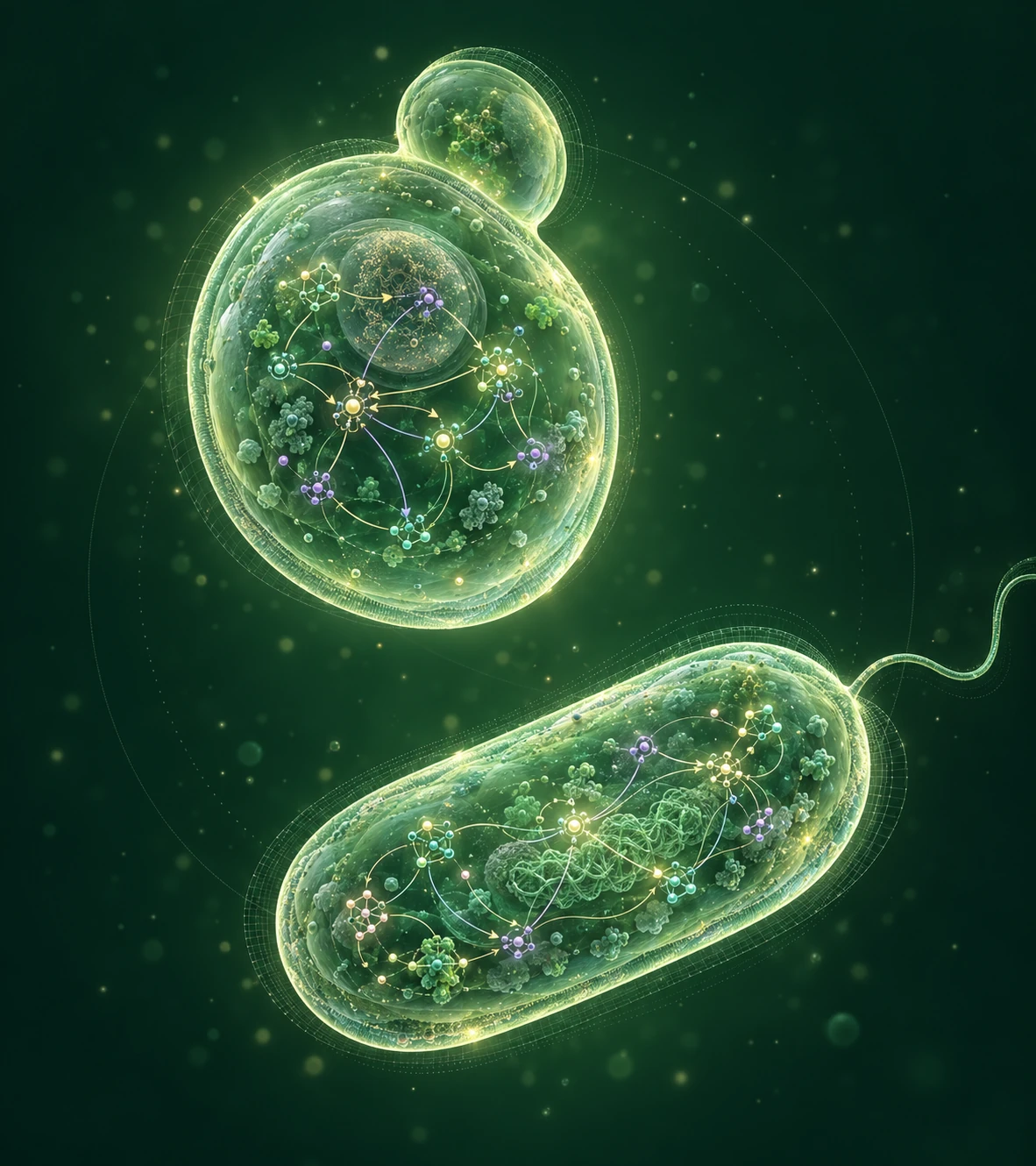
Small organisms.
Extraordinary potential.
Microbial diversity + Multiomics + Metabolic modeling + Artificial intelligence
A microbial chassis is a cell, often a yeast or bacterium, engineered to act as a tiny living factory.
Instead of assembling a product on a conventional production line, these organisms use their own biology to produce valuable molecules. The challenge is choosing and engineering cells that can keep performing beyond the lab.
We’re developing Chassix AI to connect genomics, multiomics, metabolic modeling, and AI with design decisions: which host to explore, how it might respond to industrial stress, and which engineering strategies to test next.
A LIVING SYSTEM. A COMPUTATIONAL COUNTERPART.
A digital twin is a virtual representation of a real system. Our goal is to build computational counterparts of microbial cells, linked to biological data, that help researchers explore how a host might respond to changing conditions.
Digital twin definition · NIST ↗Genomes, RNA, proteins, metabolites, and flux measurements where available.
Model stress responses and compare candidate host and engineering strategies.
Test predictions and use new measurements to refine the model.
Proposed design and learning loop. Framework in development.
A production pathway is only as dependable as the cell that carries it. As fermentation scales, heat, osmotic stress, shear forces, and uneven nutrient or oxygen supply can disrupt microbial performance. A promising lab strain may need substantial adaptation for industrial production.
A better production process starts with a more resilient living foundation.
Scale-up challenges · FEMS Microbiology Letters (2018) ↗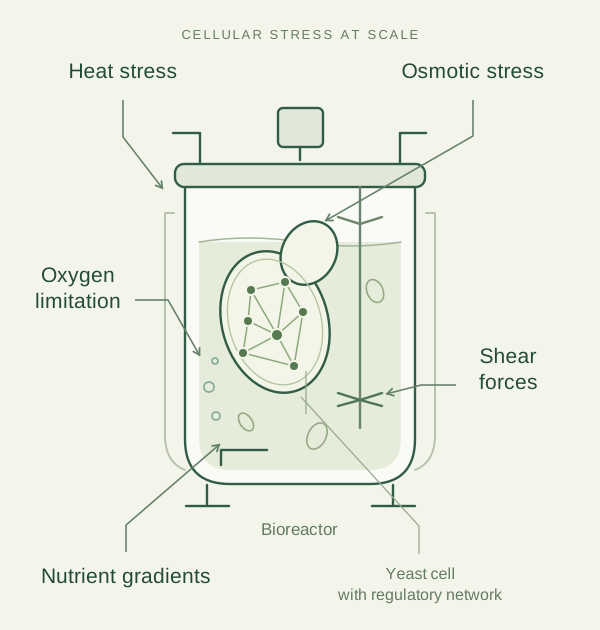
From pharmaceuticals and alternative proteins to materials, chemicals, and clean fuels, biological innovation could reshape essential industries. Reliable production hosts are part of making that potential practical.
Estimated global direct impact across biological applications in 2030–2040.
Estimated direct impact from biological applications in these sectors in 2030–2040.
Could, in principle, be produced biologically. Realizing this potential will take time.
Scenario estimates for broad biological innovation, published in 2020 by McKinsey Global Institute.
Read The Bio Revolution report ↗WHERE CHASSIX AI FITS
Our focus is the living foundation: using nature’s stress tolerance to inform microbial digital twins and guide the design of resilient production hosts.
Our proposed workflow brings archaea, bacteria, and yeasts into a shared digital twin framework for AI-guided engineering and experimental learning.
NATURE’S DIVERSITY, CONNECTED
From extremotolerant organisms to established model hosts, these examples bring distinct biological starting points to our work.
Escherichiacoli
Sulfolobusacidocaldarius
Saccharomycescerevisiae
COMMON ANCESTRY
01 / MICROBIAL DISCOVERY
We’re exploring microbial diversity, from naturally extremotolerant archaea to bacteria and yeasts. Understanding the mechanisms behind stress tolerance may reveal stronger starting points for industrial production.
Development roadmap · Proposed capabilities require experimental validation.
A FUTURE INTERACTION CONCEPT
“Find a resilient host for enzyme production under heat and salt stress.”
We aim to build an agentic research workflow that turns natural-language goals into modeling tasks and candidate designs. Scientists would review predictions and validate them experimentally.
We aim to help unlock biological routes to essential products, with resilience at the heart of the design.
Potential applications in biodegradable plastics and next-generation biomaterials.
Exploring microbial production pathways for sustainable aviation fuels and other biofuels.
Future opportunities in sustainable chemicals, specialty ingredients, and pharmaceutical production.
Illustrative application areas. Product performance, economics, and environmental benefits will need to be assessed for each use case.
THE FUTURE WE’RE WORKING TOWARD
We envision a world where digital twins and AI make biological factory design more accessible, helping sustainable manufacturing become an economically competitive choice.
Aditya and Monoswi bring complementary perspectives from computer science and biology, united by a desire to use their work for people and the planet. Chassix AI is where those paths meet.
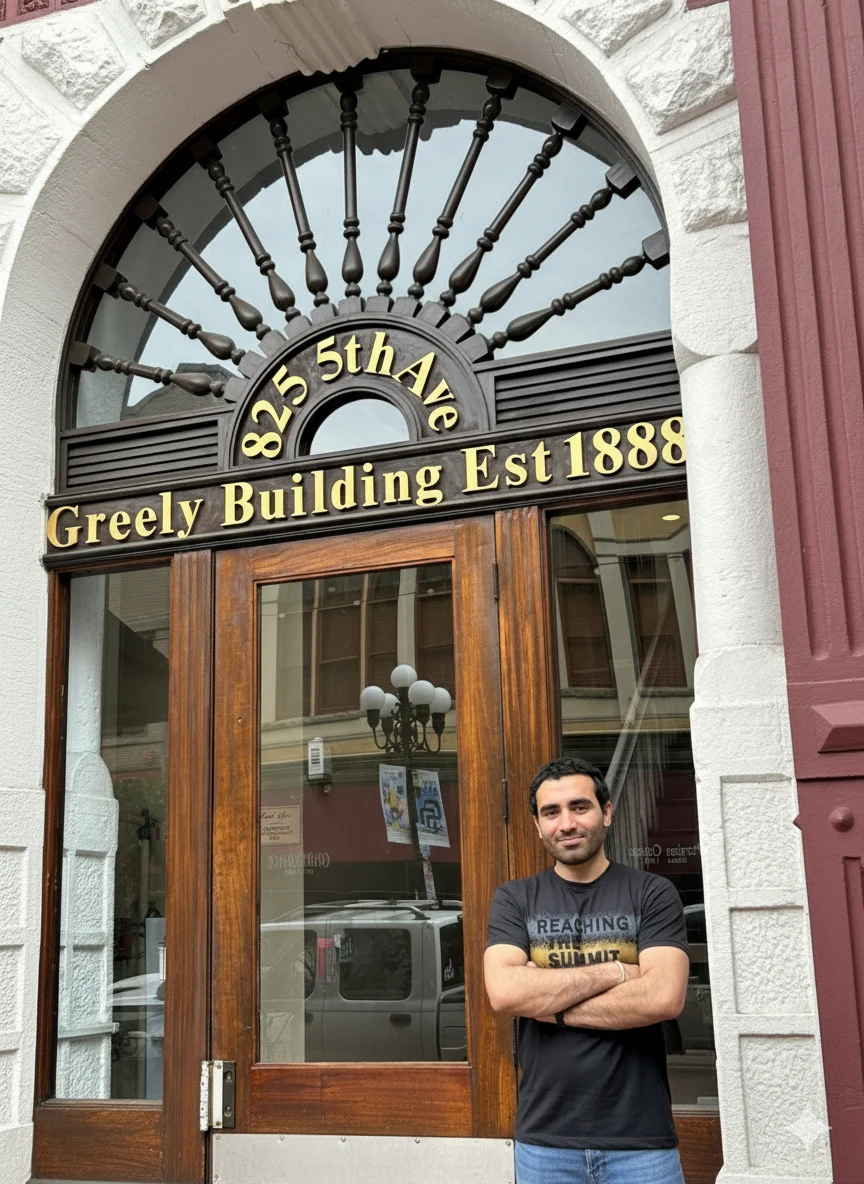
CO-DEVELOPER
Aditya holds an M.S. in Computer Science from UC Riverside. He wants to put his background in computer science, engineering, and machine learning to work on challenges that matter, using AI to advance sustainability and social good.
abhar061@ucr.edu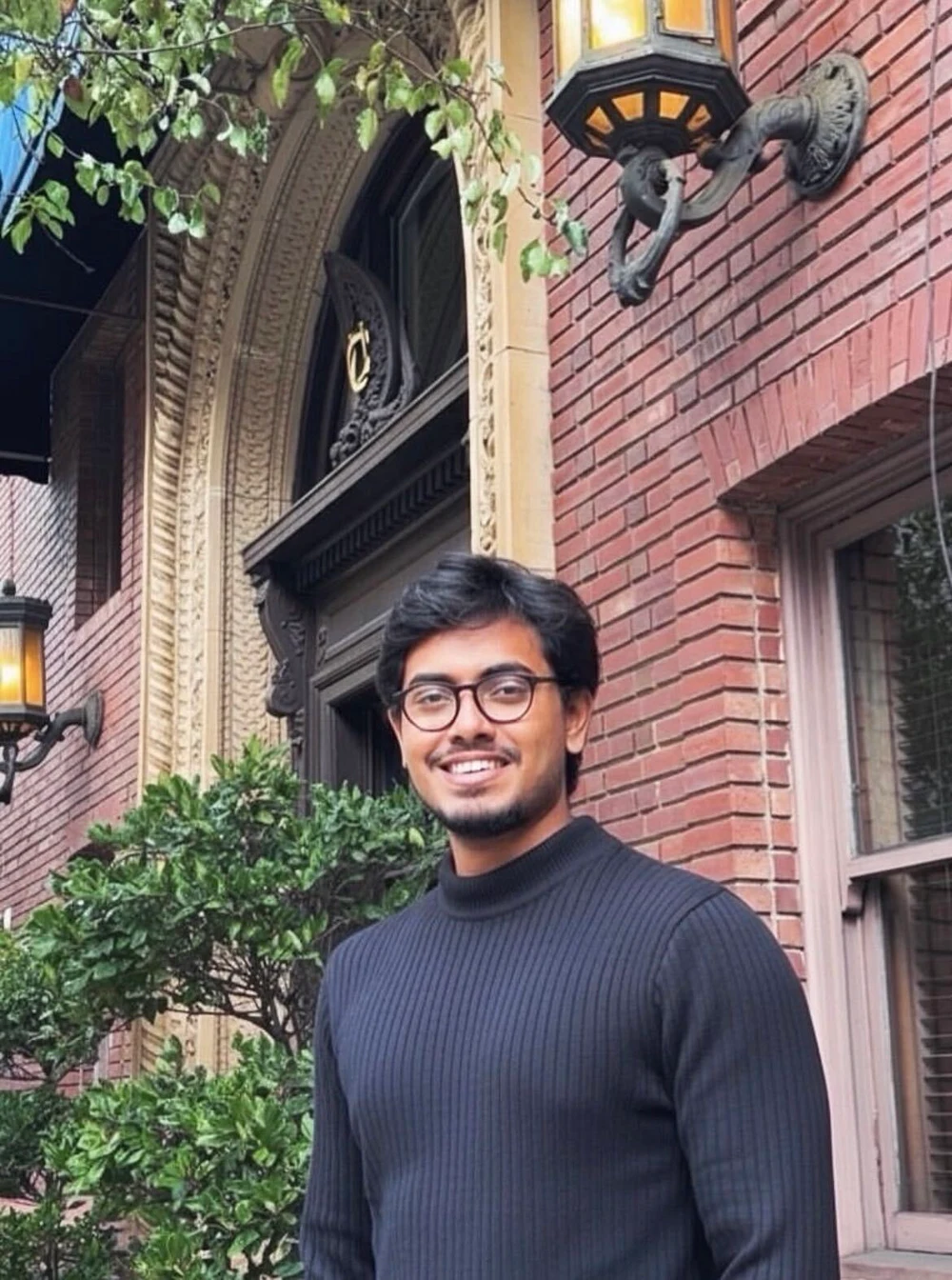
CO-DEVELOPER
Monoswi is pursuing a Ph.D. in Genetics, Genomics, and Bioinformatics at UC Riverside. He wants to bring his background in bioinformatics and synthetic biology to questions of planetary health, helping shape a more sustainable future for biomanufacturing.
mchak015@ucr.eduLET’S BUILD WHAT COMES NEXT
We welcome conversations with researchers, biomanufacturing teams, and investors who share our vision.
Explore research collaboration, share an industrial challenge, or discuss the vision behind Chassix AI.
Start a conversation Monoswi · mchak015@ucr.eduAditya · abhar061@ucr.edu